

 France
 Italy
 Spain
 Poland
 Germany
 Czech Republic
 Europe
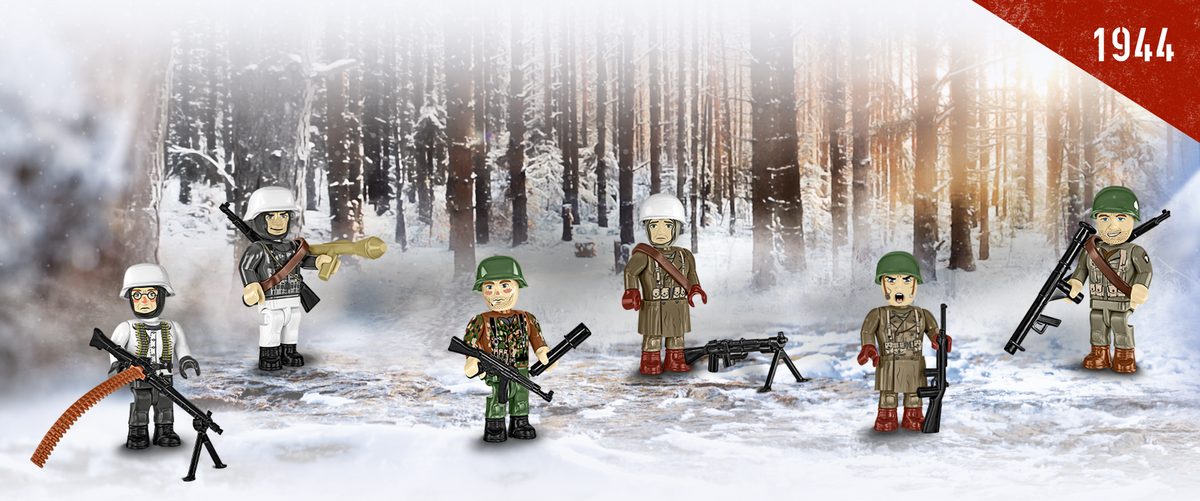
On December 16, 1944, when it seemed that the war in Europe was inevitably drawing to an end, German forces launched a surprise offensive in the Ardennes. The Battle of the Bulge became one of the largest and most dramatic battles on the Western Front during World War II.
Snow, freezing temperatures, dense forests, and limited visibility meant that soldiers had to fight not only the enemy but also extremely harsh conditions. The battle lasted from December 16, 1944, to January 25, 1945, and one of its most enduring symbols became the besieged Belgian town of Bastogne.
Why Did Germany Attack in the Ardennes?
By the end of 1944, the situation for Nazi Germany was becoming increasingly difficult. The Allies had liberated much of France and were approaching Germany's borders, while the Red Army was advancing from the east.
The Germans decided on a high-risk plan: break through the Allied front in the Ardennes, advance through Belgium, and push toward the strategically important port of Antwerp. A successful offensive was intended to split American and British forces and change the course of the war on the Western Front.
Surprise Was the Key
The Ardennes were not chosen by accident. Dense forests, difficult terrain, and winter weather meant that the Allies did not expect a major German offensive in this area.
The attack began on December 16. Initially, German forces made significant advances, penetrating deep into Allied positions. A distinctive bulge appeared in the front line on military maps, giving the battle its famous name: the Battle of the Bulge.
The Frozen Hell of the Ardennes
The conditions during the battle were exceptionally harsh. Freezing temperatures, snow, and icy roads made transporting troops, fuel, ammunition, and food extremely difficult. Dense forests limited visibility, and fighting often took place at close range.
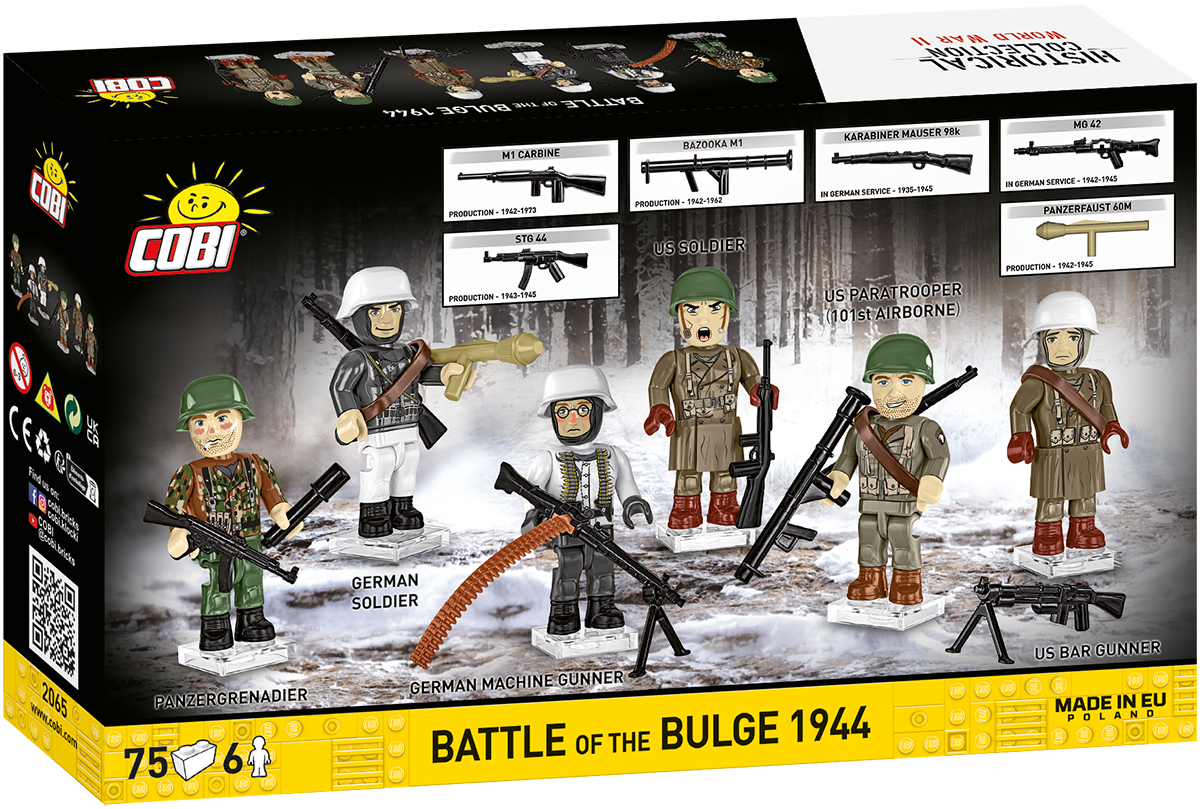
Soldiers used weapons that became icons of World War II. On the German side, these included the MG 42, Karabiner 98k, StG 44, and Panzerfaust. American troops relied on weapons such as the M1 Garand, M1 Carbine, Browning Automatic Rifle, and Bazooka.
Six Soldiers of the Battle of the Bulge
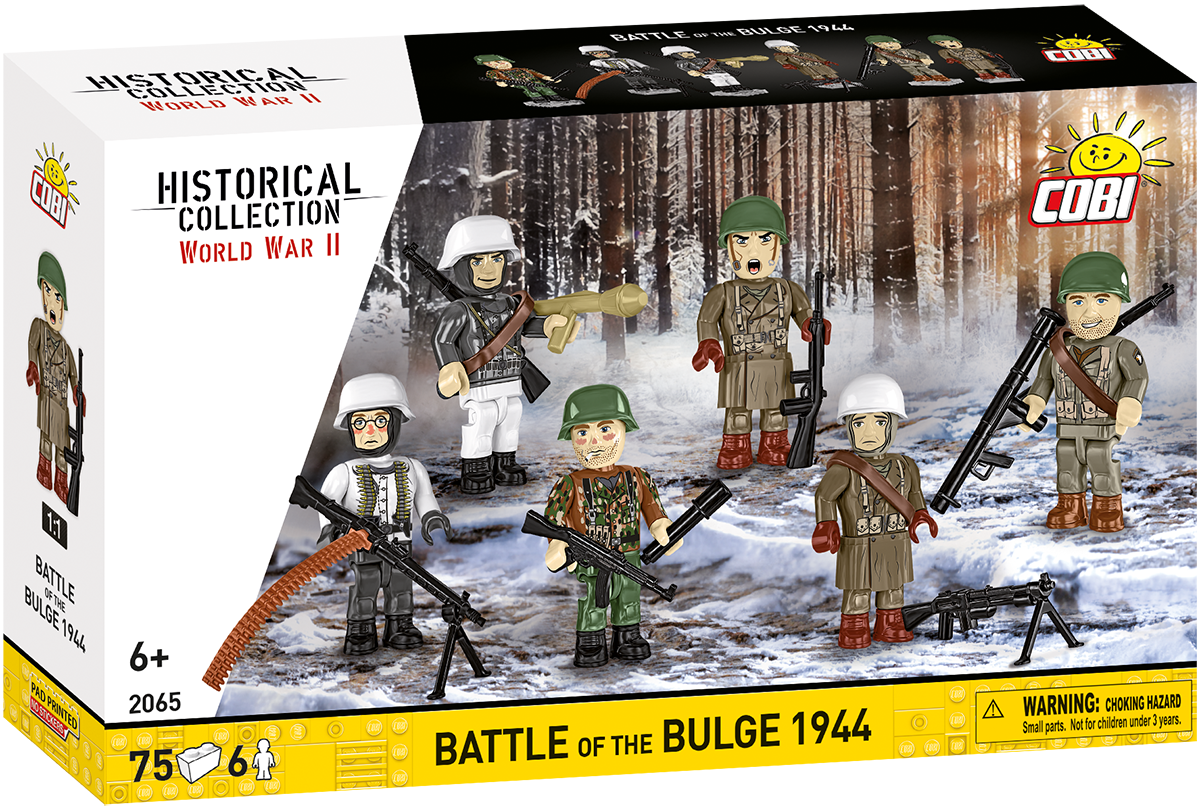
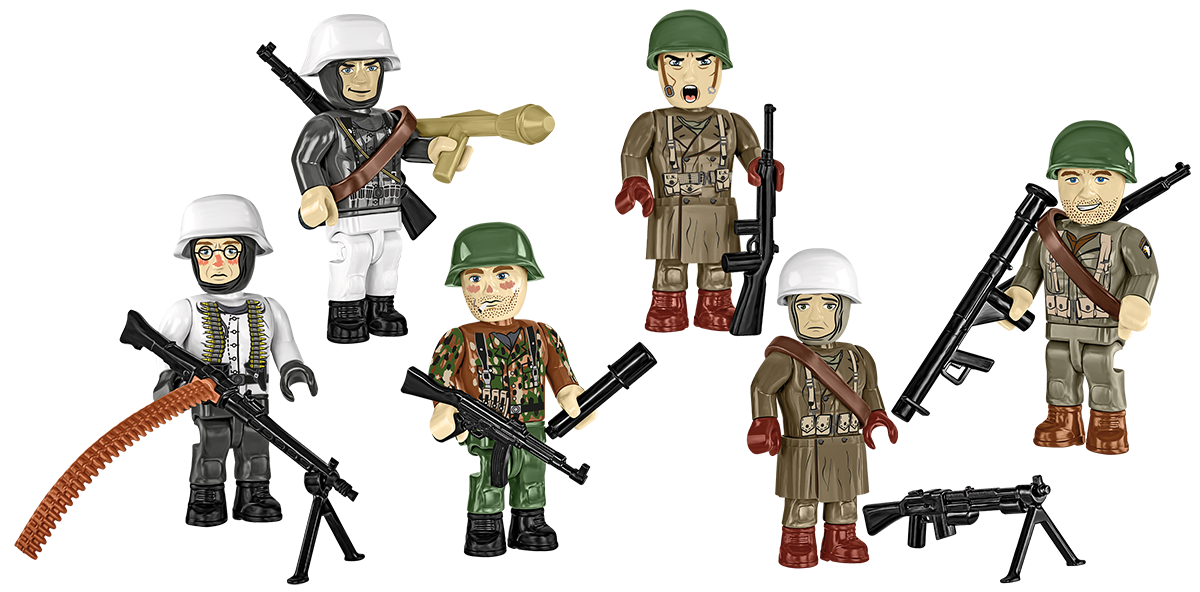
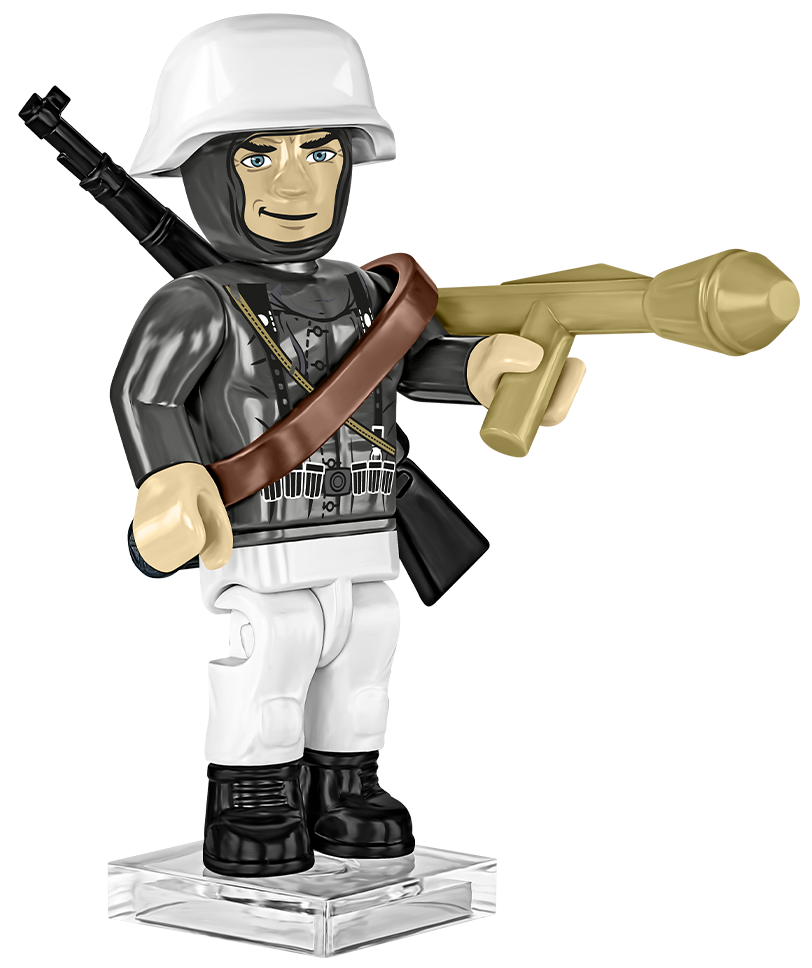
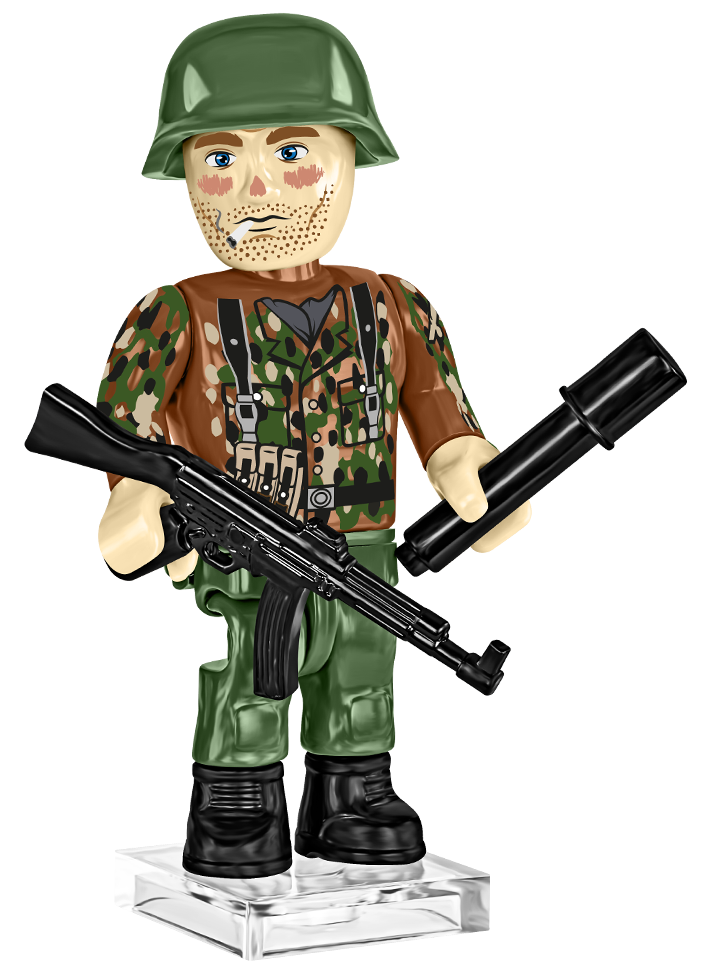
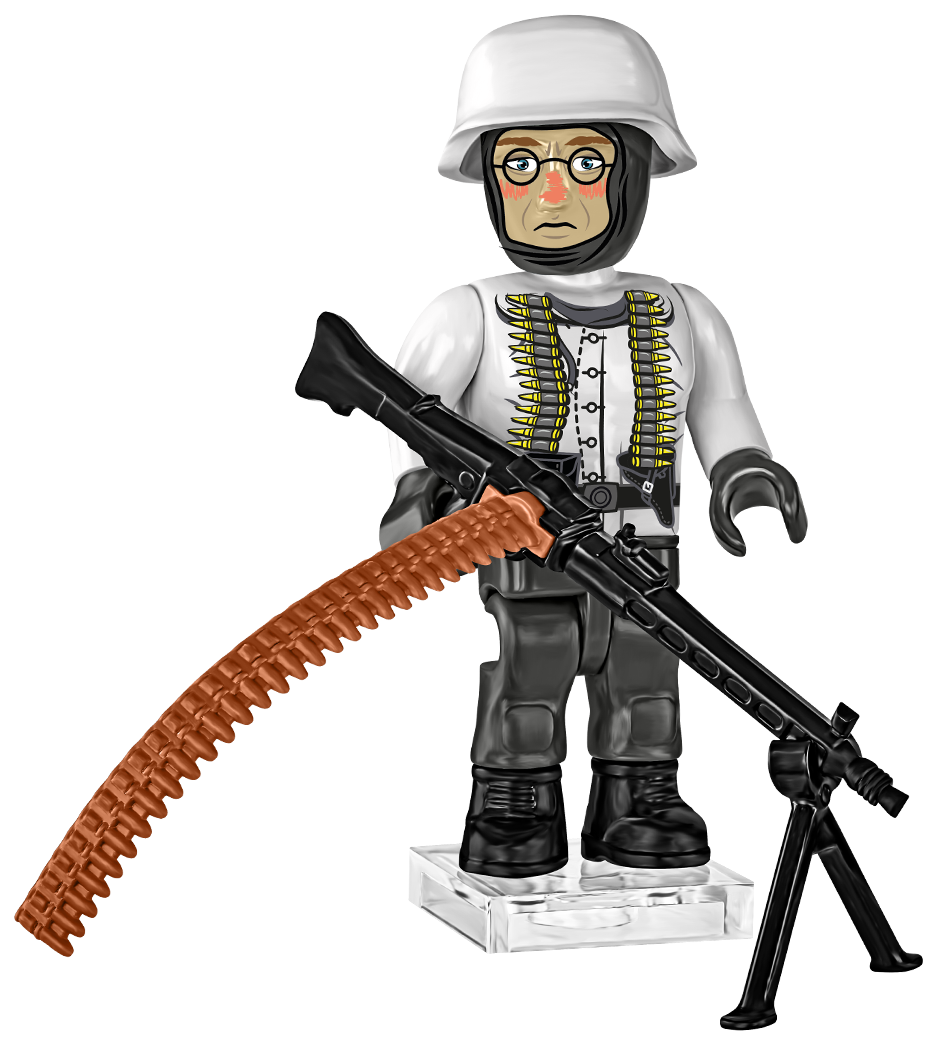
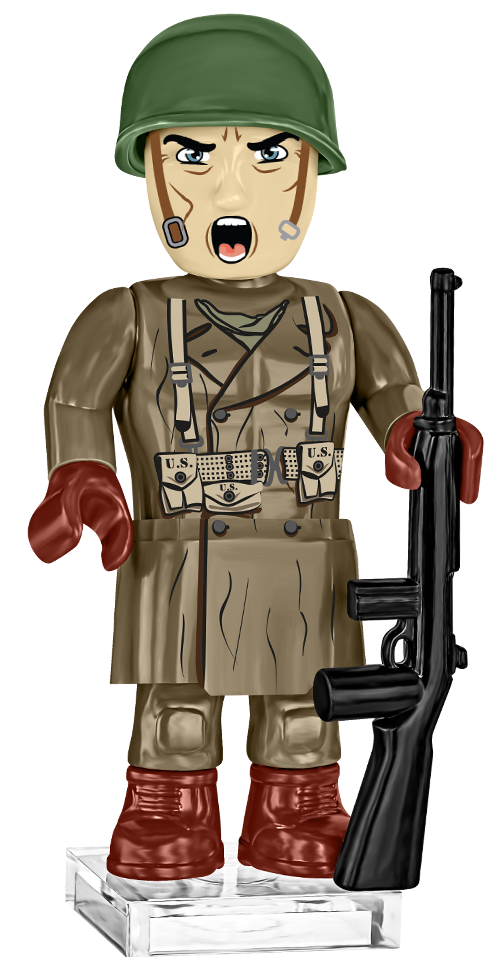
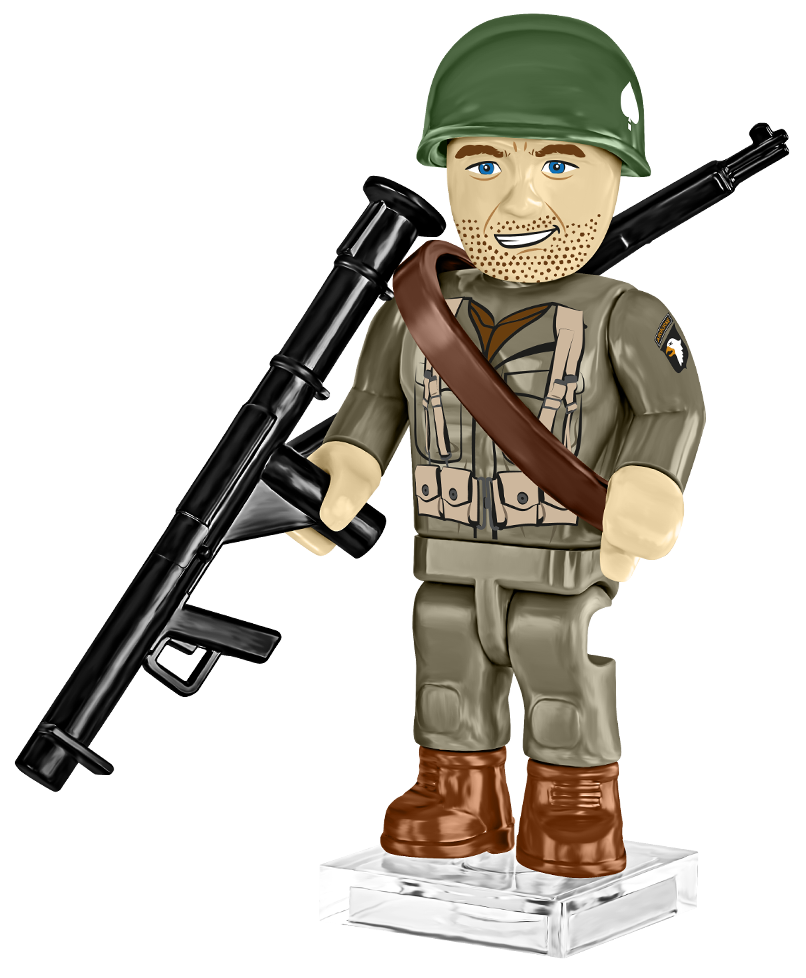
The COBI-2065 Battle of the Bulge 1944 set pays tribute to the soldiers who fought in the Ardennes. It includes six minifigures – three German and three American soldiers – complete with distinctive equipment and weapons.
Among them are a German MG 42 machine gunner in winter camouflage, a Panzergrenadier armed with an StG 44, and an American soldier carrying a Browning rifle. The set also features a paratrooper from the famous 101st Airborne Division, whose history is inseparably linked to one particular place: Bastogne.
Bastogne – The Town That Had to Be Held
Bastogne was not a large town, but it held enormous strategic importance. Several major roads intersected there, making it a crucial transportation hub for moving troops and supplies through the Ardennes.
German forces surrounded the town, but its defenders – including soldiers of the U.S. Army's 101st Airborne Division – had no intention of surrendering.
"Nuts!" – One Reply That Made History
On December 22, 1944, German forces demanded the surrender of the American troops defending Bastogne.
General Anthony McAuliffe's response was remarkably brief:
"Nuts!"
This single word, which in this context can be understood as a firm "No way!", went down in history and became a symbol of the defense of Bastogne.
Just a few days later, on December 26, troops from General George Patton's Third Army reached the town, breaking through the German encirclement.
Why Did the German Offensive Fail?
The initial German success did not last long. German units increasingly struggled with shortages of fuel and supplies, while the Allies continued to bring in reinforcements.
The weather also played a crucial role. Heavy cloud cover initially limited Allied air operations, but when the skies cleared, aircraft were once again able to support ground forces and attack German positions and supply lines.
January 25, 1945 – The End of the Battle of the Bulge
By the end of January, Allied forces had recaptured the lost territory. On January 25, 1945, the Battle of the Bulge officially came to an end.
The Germans failed to capture Antwerp or split the Allied forces. Moreover, the offensive cost them soldiers, equipment, and fuel that they could no longer easily replace at this stage of the war.
Just a few months later, the war in Europe came to an end.
Bring the Battle of the Bulge to Your Collection
The frozen forests of the Ardennes, the surrounded town of Bastogne, and the determined defense of the 101st Airborne Division are scenes you can now recreate right on your desk.
The COBI-2065 Battle of the Bulge 1944 set brings this history to life with 75 pieces and six detailed minifigures, ready to become the starting point for your very own Ardennes diorama.
It's a great foundation for expanding your collection. Combine the set with vehicles and other models from the COBI Historical Collection WWII series to create an entire battlefield scene – from fighting in snow-covered forests to the desperate defense of the town that helped stop the German offensive.





0 comments